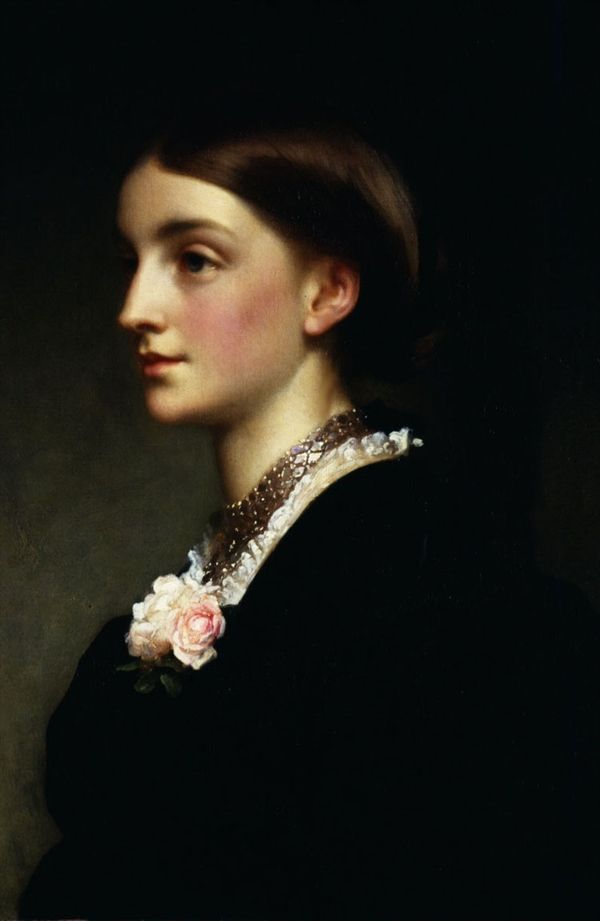
 Rosalind Howard, Countess of Carlisle (February 20, 1845 - August 12, 1921), was a prominent British aristocrat, political activist, and leader in the temperance and
women’s suffrage movements.
Rosalind Howard, Countess of Carlisle (February 20, 1845 - August 12, 1921), was a prominent British aristocrat, political activist, and leader in the temperance and
women’s suffrage movements.Queer Places:
Castle Howard, York YO60 7DA, United Kingdom
Naworth Castle, 3 The Gatehouse, Brampton CA8 2HF, United Kingdom
Lanercost, Brampton CA8 2HQ, United Kingdom
Rosalind Howard, Countess of Carlisle (February 20, 1845 - August 12, 1921), was a prominent British aristocrat, political activist, and leader in the temperance and
women’s suffrage movements.
Born Rosalind Frances Stanley, she was the tenth child of the 2nd Baron Stanley of Alderley and the educationalist Henrietta Stanley. In 1864, she married the painter and politician George Howard, who later became the 9th Earl of Carlisle.
Known as the "Radical Countess," she was a formidable figure in late Victorian and Edwardian society. Her primary public focus was on:
She was a staunch teetotaler of The Temperance Movement, famously closing public houses on her family estates. She served as President of the British Women’s Temperance Association (BWTA) from 1903 until her death.
She was heavily involved in the Women’s Liberal Federation, serving as its president for many years, and she was a vocal advocate for extending the vote to women.
She managed the extensive Castle Howard and Naworth Castle estates, often holding differing political views from her husband, which eventually led the couple to spend much of their later married life living apart.
While Rosalind Howard’s life has been the subject of biographical interest, her legacy is defined by her radical political stances, her strict moral codes regarding alcohol, and her often strained relationships with her children.
Biographical studies of her era often explore the social construction of gender and identity, but this should not be confused with the personal identity of the subject herself.
Some academic search results that appear in relation to her name are broad bibliographies or anthologies covering LGBT history, media studies, or feminist scholarship that mention various historical figures or themes.
Florence Martin Embleton served as an organizing secretary to Rosalind Howard, Countess of Carlisle. Historical records, including the 1901 and 1911 censuses, document her working for and visiting the Countess at Castle Howard.
Florence’s sister was Alice Laura Embleton, a pioneering biologist and suffragist. Alice was a member of the "Foosack League," a private, secret society for women that evidence suggests was a network for lesbians among suffrage activists. Alice lived with her long-term partner, the architect and suffragette Celia Wray, for many years, including at a residence called "The Elms" in Saxmundham, Suffolk.
Correspondence and personal documents from the era—such as those held at The Women’s Library—reveal that Alice was affectionately referred to as "Alick" and Celia as "Mr. Wary" within their close-knit circle of friends, which also included figures like the suffragette chauffeur Vera "Jack" Holme.
Rosalind Howard was the sister of The Hon. Maude Alethea Stanley. Maude was a significant social reformer in her own right, known for her pioneering work with youth clubs and as an advocate for working-class girls.
While Maude Stanley is not traditionally identified as LGBTQ, her life path—remaining unmarried and dedicating herself to female-centric social and educational initiatives—was a common "alternative" lifestyle for Victorian and Edwardian women of her class. Like her sister Rosalind, she was part of a highly educated, politically active family deeply involved in the social changes of their time, including the women's movement.
The presence of someone like Florence Embleton as a secretary to a "Radical Countess" like Rosalind Howard, while her own sister (Alice) was deeply embedded in a secret, lesbian-coded suffrage group (the Foosack League), illustrates how the suffrage movement acted as a "big tent." It brought together:
Establishment reformers like the Countess of Carlisle, who focused on temperance and constitutional suffrage.
Social Radicals like Alice Embleton and Celia Wray, who operated within private, transgressive social spheres while advancing their scientific and political goals.
These links suggest that the Countess of Carlisle—herself a woman who subverted gender roles by managing her own estates and engaging in aggressive political lobbying—was situated at the center of a web that included women who were living unconventional, queer-coded lives, even if the Countess herself remained within the conventional (if radical) social structures of her class.
She remains a significant figure in the history of British social reform, recognized for her organizational skills and her unwavering commitment to the political and social causes she championed.
Support this project
This website is a passion project researched, developed, and funded entirely by me. If you find the content valuable and would like to help support the ongoing research and hosting costs, any contribution is deeply appreciated.
Thank you for keeping this independent resource alive!
My books on Amazon: Elisa Rolle's books